Who is Török Viki?
I am an economist who loves to travel and loves visual arts. I came from a small Hungarian city and since my childhood I drive my friend...
Sunday, 31 July 2011
Tuesday, 26 July 2011
Saturday, 23 July 2011
![]() |
| The employees of the museum rated the museum as a workplace. Ludwig Museum, Helyszíni szemle - Site Inspection, Budapest. Photo by Török Viktória |
Wednesday, 20 July 2011
![]() |
| Ai Weiwei, Han Dynasty vases and industrial paint, Lisson Gallery, London photo by Török Viktória |
It was the 7th of July when I arrived to London from the British countryside and decided to visit the Lisson Gallery first. On the way to the exhibition the exit of the Edgware Road tube station was full of people giving some leaflets away. That was the moment when I realised that it was the anniversary of the 7/7 bombings in London and the station where I was is one of the places where explosion happened... It was raining but nobody cared – more and more people arrived to the station from the nearby streets. There were remembrance events across the city.
Just to make it even more moving I was heading to see the works of Ai Weiwei who was arrested on the 3rd of April this year. Nobody knows what happened to him in those days until the 22nd of June when he was released as the Chinese Prime Minister was heading to Europe (starting with Hungary) and it was too much pressure on him regarding his case.
An artist who is celebrated worldwide but never had an exhibition in his own country...
![]() |
| Graffiti on the wall, next to the Lisson Gallery, London, photo by Török Viktória |
Tuesday, 19 July 2011
Saturday, 16 July 2011
There is a beautiful photography exhibition at the Royal Academy of Arts in London. Ok, probably I am overexcited as it is a Hungarian photography exhibition but it is really – really beautiful.
I had a conversation about it with my former boss in London and actually she said that she knows these photographers but never realised that they were all Hungarians. Well, I think this is the case for a lot of people all over the world: everyone is familiar with the works of Robert Capa, Andre Kertesz, Laszlo Moholy-Nagy, Martin Munkacsi or Brassai just to mention the biggest names… They all left Hungary and made their names abroad: in France, Germany or even in the USA. The exhibition also shows works by photographers who stayed in Hungary so you really have a great overview of the Magyar style of photography – and what happened in Hungary at that time.
The 200 photographs cover the most important historical events, developments in photography between 1914 and 1989 that was a significant year from Hungary with the ending of the communism.
I visited the exhibition in the morning just after opening time and it was busy right from the opening of the doors. I can tell you I felt very proud while being there and listening to people’s conversations about the photograph they were looking at.
The picture which was selected to advertise the show is one of my favourites. It is by Martin Munkacsi (Nude in Staw Hat, 1944) and as it says it is a nude photograph. I like it because it is so elegant, natural and relaxed at the same time.
I was also very happy to see there photographs by Peter Korniss who is an amazing artist and he is one of the teachers at the photography course I am starting in September. Lucky!
I had a conversation about it with my former boss in London and actually she said that she knows these photographers but never realised that they were all Hungarians. Well, I think this is the case for a lot of people all over the world: everyone is familiar with the works of Robert Capa, Andre Kertesz, Laszlo Moholy-Nagy, Martin Munkacsi or Brassai just to mention the biggest names… They all left Hungary and made their names abroad: in France, Germany or even in the USA. The exhibition also shows works by photographers who stayed in Hungary so you really have a great overview of the Magyar style of photography – and what happened in Hungary at that time.
The 200 photographs cover the most important historical events, developments in photography between 1914 and 1989 that was a significant year from Hungary with the ending of the communism.
I visited the exhibition in the morning just after opening time and it was busy right from the opening of the doors. I can tell you I felt very proud while being there and listening to people’s conversations about the photograph they were looking at.
The picture which was selected to advertise the show is one of my favourites. It is by Martin Munkacsi (Nude in Staw Hat, 1944) and as it says it is a nude photograph. I like it because it is so elegant, natural and relaxed at the same time.
I was also very happy to see there photographs by Peter Korniss who is an amazing artist and he is one of the teachers at the photography course I am starting in September. Lucky!
![]() |
| Eyewitness - Hungarian Photography in the 20th Century. Royal Academy of Arts, London, photo by Török Viktória |
Wednesday, 13 July 2011
I just arrived from London today. Well in the morning when I left London it was around 18 degrees (Celsius) there and when we arrived to Budapest it was 30 degrees. (!!!) Hell, but I don't complain.
In the coming days I will share with you what I visited - for now here you are some of the pictures. And now, I am going to sleep...
![]() |
| "you can cage the singer but not the song - free Ai Weiwei" as it says on the wall next to the Lisson Gallery where the artist is on show. photo by Török Viktória |
![]() |
| Miro - Miro - Miro. A real blockbuster at the Tate Modern. photo by Török Viktória |
![]() |
| Little, intimate show from Cecily Brown at the Gagosian Gallery in Davies street. Beautiful colors and strokes on the canvas. Photo by Török Viktória |
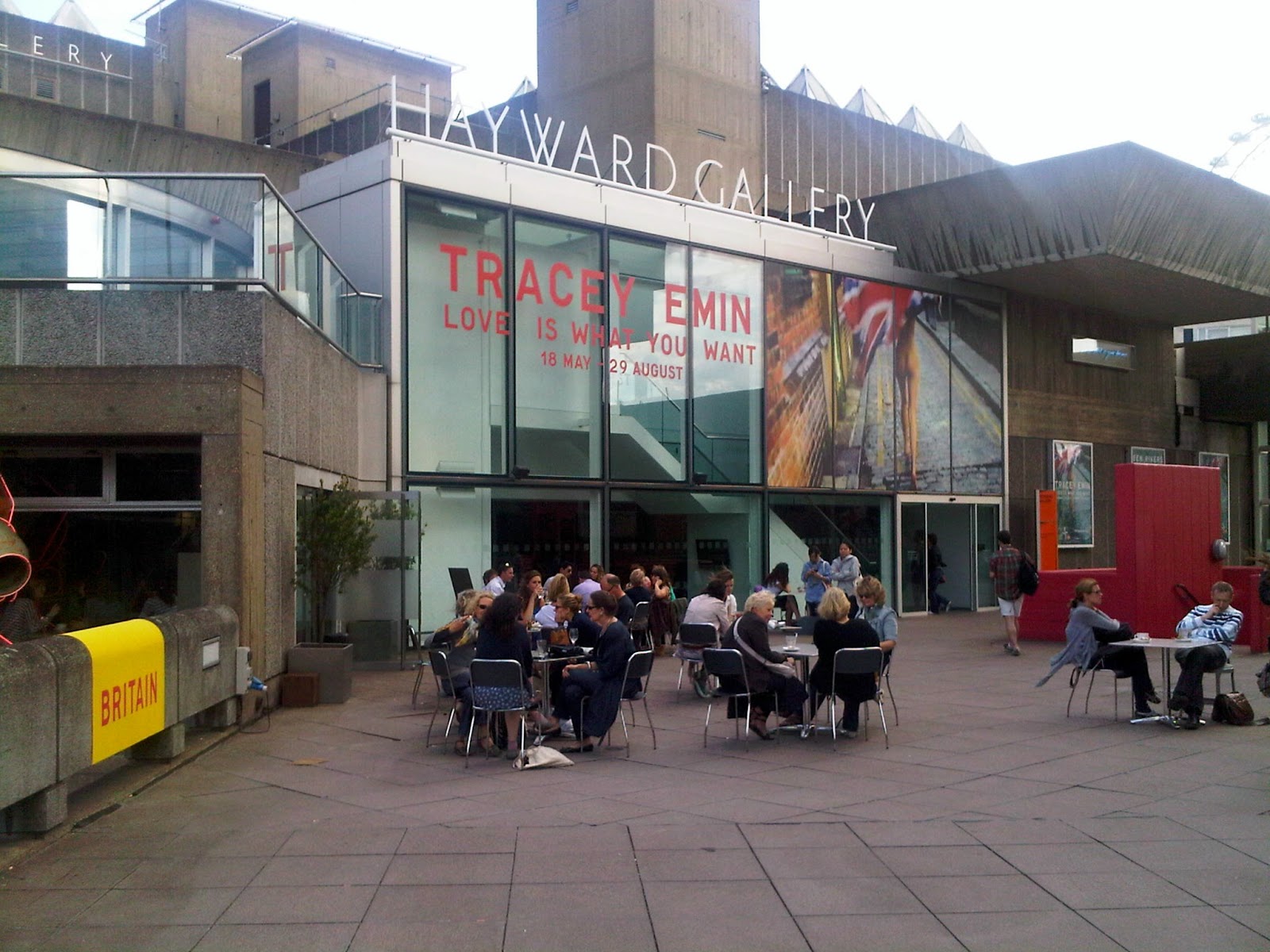
![]() |
| Tracey Emin show at the Hayward Gallery. Huge. photo by Török Viktória |
![]() |
| Colourful. Summer Exhibition at the Royal Academy of Arts. photo by Török Viktória |
![]() |
| And all black by the Serpentine Gallery. Peter Zumthor's Pavilion. photo by Török Viktória |
Monday, 11 July 2011
Sunday, 10 July 2011
Saturday, 9 July 2011
On the Venice Biennale in the Pavilion of Egypt you can see the works of Ahmed Basiony. Sadly the artist died this year on 28 January at the Tahrir Square in Cairo while filming the revolution. Basiony’s work for the Biennale 30 Days of Running in the Place is the play of a video documentation to a project that had taken place a year ago. The pavilion was full of people but nobody wanted to talk to each other. Watching the film of his performance and at the same time his documentation of the Tahrir Square fights made people speachless.
| This is what you see first when you enter the Pavilion of Egypt. Venice Biennale, Giardini, photo by Török Viktória |
| Inside of the Pavilion. Basiony's works on both sides and the Tahrir Square film in the middle.Venice, Giardini, photo by Török Viktória |
Tuesday, 5 July 2011
In Venice after visiting the Pavilion of Montenegro don’t leave immediately but go upstairs and visit the Pavilion of Estonia, too. Liina Siib’s project (A Woman Takes Little Place) consists of a six rooms installation in an apartment-like environment. In other rooms there are photo and video installations exploring various topics from femininity and social space to different representation of women in the contemporary society. She also examines feminine jobs and prostitution. The title work of the exhibition that is a photo installation captures women of different ages and social status at their places of work.
Recently I worked on a project – a completely different area, nothing to do with art – that made me think what women need to do in life. What are we here for? In the pavilion of Estonia those pictures show women with hard jobs, nothing feminine; a butcher shouldn’t be a woman in my opinion for instance. I can see these sorts of faces every day on the metro in Budapest. You can see on their faces that they gave up something. Probably long time ago they all had a dream of being someone’s princess, or just to have a beautiful life and enjoy being a woman. Where are those dreams now?
| Liina Siib: A Woman Takes Little Place, Pavilion of Estonia, Venice, photo by Török Viktória |
Friday, 1 July 2011
| Israeli Pavilion, Venice Biennale, Giardini, this year the artist is Sigalit Landau: One Man's Floor Is Another Man's Feelings (graved in the wall of the pavilion), photo by Török Viktória |
| President Shimon Perez is leaving his boat for the opening of the Israeli Pavilion, Venice, Giardini, photo by Török Viktória |
Subscribe to:
Posts (Atom)
Most visited posts
-
Cold here - perfect time for art. Don't miss the Mapplethorpe exhibition at the Ludwig Museum when in Budapest. I especially liked hi...
-
The French Pavilion, Venice Biennale, Giardini, photo by Török Viktória This year Christian Boltanski took over the pavilion to creat...
-
One of my favourite places at the Biennale. It was all about flavours and smells. The amazing installation view at the Pavilion of Peo...